Why My Due Date Calculator Was Useless During Portland's Smoke Season—And What I Learned About Pregnancy in a Climate Crisis
Emily Carter
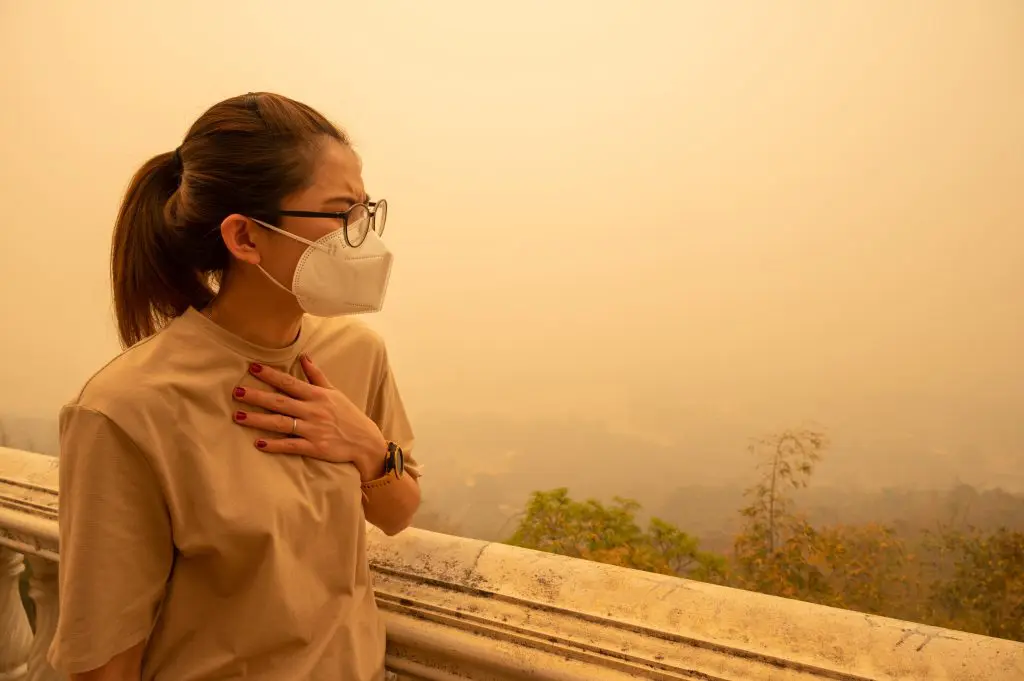
I was twenty-six weeks pregnant when the wildfire smoke rolled into Portland, and the first thing I did was check my due date calculator. Not because I thought the smoke would affect my due date. I just needed something to control. Something predictable. The app told me I had ninety-eight days to go. September 14th. It might as well have been a million years away. Because the air outside my window was orange, the air quality index was 187, and I was sitting in my 89-degree apartment wondering if breathing this air for the next three months was going to hurt my baby. The due date calculator didn't have a field for "wildfire smoke exposure." It didn't have a field for "heat dome during third trimester." It had my last menstrual period, my cycle length, and a cute animation of a fetus growing. It was not built for the climate I was pregnant in.
I've been a nurse for twelve years. I know pregnancy. I've worked in labor and delivery. I've seen complications, emergencies, miracles. I know what normal looks like. And I know that what I was experiencing in July 2026 was not normal. The heat made my ankles swell to the size of grapefruits. The smoke made my throat burn. The stress of wondering whether my apartment was safe made my blood pressure spike. I called my obstetrician. She told me to stay indoors, run a fan, and stay hydrated. She didn't mention the smoke. She didn't mention that indoor air quality in old Portland apartments can be as bad as outdoor air quality. She didn't mention that heat stress in pregnancy is linked to preterm labor, low birth weight, and gestational diabetes. She gave me the standard advice because there is no non-standard advice for pregnancy in a climate crisis. The medical establishment hasn't caught up. And pregnant people are left figuring it out alone.
Here's what heat actually does to a pregnant body that the pregnancy apps don't tell you. Pregnancy increases your metabolic rate by 15 to 20 percent. Your body is already generating more heat than normal. Your blood volume increases by 50 percent. Your cardiovascular system is working harder. Add an ambient temperature of 90 degrees, and your body is running a marathon just to exist. The heat dissipation mechanisms that work for non-pregnant people—sweating, vasodilation, behavioral cooling—are less effective in pregnancy because the increased blood volume and hormonal changes alter thermoregulation. You sweat less efficiently. Your skin blood flow is already elevated, so there's less reserve capacity for heat dissipation. And your core temperature is naturally higher, which means you have less margin before reaching dangerous levels.
I started tracking my symptoms because I'm a nurse and I can't help myself. Resting heart rate: elevated by 12 beats per minute on days over 85 degrees. Blood pressure: borderline on the worst heat days, requiring me to lie down with my feet elevated. Edema: dramatically worse in the heat, my fingers so swollen I couldn't wear my wedding ring. Sleep: fragmented, shallow, and insufficient because my body couldn't cool down at night. And the baby? She was moving less on the hottest days. Not dangerously less. But less. My obstetrician said it was normal. "Babies move less when you're resting more." But I wasn't resting more. I was resting because I had no choice. Because the heat made standing for more than ten minutes feel like climbing a mountain.
The wildfire smoke was the wildcard. There's research on heat and pregnancy. There's less research on smoke and pregnancy. What exists is concerning. A 2019 study from California found that pregnant women exposed to wildfire smoke had higher rates of preterm birth and low birth weight. The mechanism isn't fully understood, but the hypothesis is that fine particulate matter—PM2.5—crosses the placenta and causes inflammation. Another study from Australia found that smoke exposure during pregnancy was associated with reduced fetal growth. The data is preliminary. The sample sizes are small. But the trend is clear: breathing wildfire smoke while pregnant is not good for the baby. And I was breathing it every day because my apartment had no air filtration and the smoke seeped in through windows that don't seal properly.
I bought a HEPA air purifier. $320. I put it in the bedroom and ran it 24/7. I bought a second one for the living room. Another $280. I sealed the windows with painter's tape and plastic sheeting. I created a "clean room" in my bedroom where the air quality was monitored and controlled. I checked the AQI every hour. On days over 150, I didn't leave the bedroom. I worked from bed. I ate in bed. I watched TV in bed. It was boring and claustrophobic and expensive. But it was what I could do. Because the due date calculator couldn't tell me whether my baby would be okay. The pregnancy app couldn't filter the air. The medical establishment couldn't give me clear guidance. So I improvised. I adapted. I did what I thought was right and hoped it was enough.
The stress was the invisible toxin. I was worried about the heat. Worried about the smoke. Worried about my blood pressure. Worried about the baby's movements. Worried about whether I could afford the air purifiers. Worried about whether my apartment was making me sick. Worried about whether I should move, and where, and how, at twenty-six weeks pregnant with a partner who works two jobs. The stress hormones—cortisol, adrenaline—were coursing through my body, crossing the placenta, affecting my baby's developing stress response system. There's research on that too. Chronic stress in pregnancy is linked to adverse outcomes. But what do you do when the source of stress is the air itself? When you can't escape it because it's everywhere? When the climate has become a threat to your unborn child and there's no due date calculator that can tell you when the threat will end?
I started a support group. Online. For pregnant people in Portland dealing with heat and smoke. We shared tips. Air purifier recommendations. Cooling strategies. Ventilation hacks. Emotional support. There were twelve of us at first. Then twenty. Then forty. We were all terrified. We were all improvising. We were all angry that no one had prepared us for this. The pregnancy books say nothing about climate change. The prenatal classes don't mention heat domes. The medical advice is generic because the research hasn't been done. We're the first generation of pregnant people to navigate gestation in a world where the climate is actively hostile to reproduction. And we're doing it with due date calculators and hope.
The due date itself became a source of anxiety. September 14th. Late summer. Historically, Portland in September is mild. But historically doesn't mean anything anymore. What if there's another heat wave? What if the smoke returns? What if I'm in labor during an air quality emergency and I can't get to the hospital because the roads are closed? What if the hospital's HVAC system can't handle the smoke and I'm giving birth in a building with toxic air? These are not irrational fears. These are logical concerns based on recent experience. The due date calculator says September 14th. The climate says maybe. Maybe not. Maybe something worse.
I'm still pregnant. Thirty-two weeks now. The heat has broken. The smoke has cleared. For now. I'm taking it one day at a time. I'm monitoring my symptoms. I'm trusting my body. And I'm preparing for a birth that might happen in conditions no one planned for. Because the due date calculator can tell me when. But it can't tell me what the world will look like on that day. And that's the uncertainty that every pregnant person in a climate crisis has to live with. Not just the uncertainty of labor. The uncertainty of the air itself.
How are you coping with pregnancy in the heat and smoke? Because I'm starting to think we need a Pregnant People Climate Survival Guide. And I'm willing to write it.
The thing that really broke my heart was talking to my mother. She's sixty-eight. She had me in 1988. She told me about her pregnancy: mild summers, clean air, no worries about the climate. She walked outside every day. She opened her windows. She didn't own an air purifier because she didn't need one. She didn't check the air quality index because it was always good. She didn't have a "clean room." She had a nursery. And she can't understand why I'm so stressed. "It'll be fine," she says. "Babies are resilient." But babies in 1988 were resilient in a different world. The air was different. The heat was different. The stress was different. And her well-meaning reassurance just makes me feel more alone. Because she can't see what I see. She can't feel what I feel. And she can't help me navigate a pregnancy that has no precedent in her experience.
I started looking at the global data. Pregnant women in India face heat stress regularly. In sub-Saharan Africa, maternal health is compromised by heat and air quality. In Australia, bushfire smoke has been linked to pregnancy complications. The research is emerging, but the pattern is clear: climate change is a reproductive health issue. And the United States, with its fragmented healthcare system and its assumption that air conditioning solves everything, is not prepared. We're not prepared for pregnant people who can't afford air purifiers. We're not prepared for pregnant people who live in apartments without AC. We're not prepared for pregnant people who work outside, or in warehouses, or in kitchens, or in any of the hot jobs that can't be done from a climate-controlled home office. The due date calculator assumes a healthy environment. The environment is no longer healthy. And the gap between those two assumptions is where the risk lives.
I started doing something radical. I stopped checking the due date calculator. I deleted the app from my phone. Not because I don't care about my due date. But because the app was making me anxious. Every time I opened it, I saw the countdown. Ninety-eight days. Eighty-seven days. Seventy-six days. And every day, the number got smaller while the uncertainty got larger. The app couldn't tell me if the smoke would return. It couldn't tell me if the heat would spike. It couldn't tell me if my baby would be born into an air quality emergency. It just counted down. And I counted down with it, growing more anxious with every number. So I stopped. I marked the date on a paper calendar. I put it in a drawer. And I focused on today. On this hour. On this breath. On the air purifier humming in the corner and the baby kicking softly in my belly. That's what I can control. That's what I can trust. Not an algorithm. Not a countdown. Just this moment, and the next, and the hope that when September comes, the air will be clear and the heat will have broken and my baby will arrive into a world that is still worth being born into.
I'm not giving up. I'm not moving. I'm not panicking. I'm adapting. I'm learning. I'm sharing what I know with other pregnant people who are just as scared as I am. And I'm demanding better from the systems that are supposed to protect us. The medical establishment needs to address climate change in prenatal care. The public health system needs to provide air purifiers to pregnant people in smoke zones. The housing system needs to ensure that every apartment has adequate ventilation and cooling. These are not luxuries. They are necessities. And until they exist, we are all improvising. All of us. Every pregnant person in Portland, in Phoenix, in Houston, in every city where the heat and the smoke are becoming the norm. We are the first generation. We will not be the last. And we deserve better than a due date calculator and a hope and a prayer.
The thing that really messed me up was the night I woke up at 2 AM and couldn't breathe. Not asthma. Not a panic attack. Just the air. Thick. Heavy. Full of something I couldn't see but could feel in my throat and my chest. I checked the AQI on my phone. 203. Hazardous. The purifier in the bedroom was running on high, but it couldn't keep up. The smoke was seeping in faster than the machine could filter it. I sat up in bed, my heart pounding, my hand on my belly, feeling the baby move in response to my stress. I didn't know what to do. I couldn't leave. I couldn't open a window. I couldn't call 911 because I wasn't dying. I was just... existing in air that was trying to kill me slowly. And my baby was existing in it too. That was the worst part. Not my fear. Her exposure. Her tiny lungs, still developing, breathing in particulate matter that no filter could fully remove. I cried that night. Not dramatic tears. Quiet, exhausted tears. The kind that come when you've done everything you can and it's still not enough.
I started sleeping with a damp towel over my face. An old trick from my grandmother, who grew up in a house without air conditioning. It helped. The moisture trapped some of the particulates. It cooled my breathing. It made the air feel less like poison. I looked ridiculous. My partner took a photo. I didn't laugh. But it worked. And in a climate crisis, you do what works. You don't wait for the perfect solution. You improvise. You adapt. You survive. And you hope that your improvised solutions are enough to get you through to the next day, the next week, the next month. Until the due date comes. Until the baby arrives. Until the world, hopefully, makes a little more sense.
I started documenting everything. The temperatures. The AQI readings. My symptoms. The baby's movements. My blood pressure. My weight. My sleep. I have a notebook now, thick with data. I'm going to show it to my OB. I'm going to show it to researchers. I'm going to show it to anyone who will listen. Because this data is evidence. It's proof that climate change is not an abstract future threat. It's a present reality that is affecting pregnant people right now. And we need to be counted. We need to be heard. We need to be part of the conversation about adaptation and mitigation. Because if we don't speak up, the next generation of pregnant people will face the same dangers with the same lack of preparation. And that is not acceptable. Not to me. Not to my baby. Not to anyone who believes that the future should be better than the past.
So here's what I'm doing. I'm staying. I'm fighting. I'm adapting. I'm sharing. And I'm refusing to let the climate steal my joy. Pregnancy is supposed to be a time of wonder. Of anticipation. Of love. And I'm holding onto that. Even in the heat. Even in the smoke. Even when the due date calculator feels like a cruel joke. I'm holding onto the wonder of feeling my baby kick. The anticipation of meeting her. The love that grows stronger with every challenge. Because that's what parenthood is. It's facing the impossible and doing it anyway. It's loving someone so much that you'll fight the air itself to keep them safe. And I'm ready to fight. For her. For me. For all of us. One day, one breath, one kick at a time.