
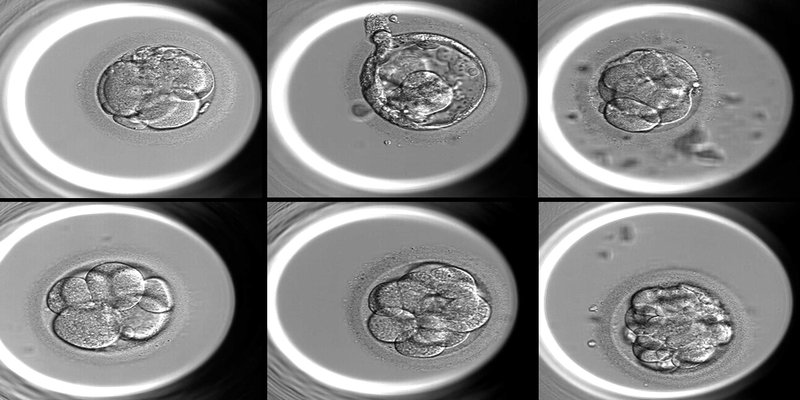
When my friend “Rachel” went through IVF in 2025, her clinic offered her something new: artificial intelligence to select which embryo to transfer. The AI analyzed time-lapse images of her embryos and ranked them. She paid an extra $800. The AI’s top pick failed to implant. The second-ranked embryo (not chosen by AI) became her son.
“I wish I’d saved my money,” she told me.
That’s not to say AI embryo selection is useless. But it’s not magic. And it’s certainly not necessary for everyone.
AI algorithms are trained on thousands of time-lapse videos of embryos. They learn which morphological features correlate with implantation — things the human eye might miss. Some studies show modest improvements in pregnancy rates. A 2025 meta-analysis in Human Reproduction pooled data from 8 trials. The result: AI selection increased live birth rates by about 5-10% per transfer compared to standard embryologist selection. That’s not nothing — but it’s also not a revolution.
The catch: AI selection is only helpful if you have multiple embryos to choose from. If you have only 1-2 embryos, the AI doesn’t have options. It will just tell you to transfer the only one you have — which you would have done anyway. The benefit comes from ranking a pool of 4+ embryos, helping choose which to transfer first and which to freeze.
Another limitation: AI models are trained on specific clinic data. An algorithm developed in one lab may not perform the same in another. Embryo culture conditions, media, and patient populations vary. A 2024 study found that an AI model that performed well in one clinic had significantly lower accuracy when tested on embryos from a different clinic. So the algorithm your clinic offers may not be as good as the research suggests.
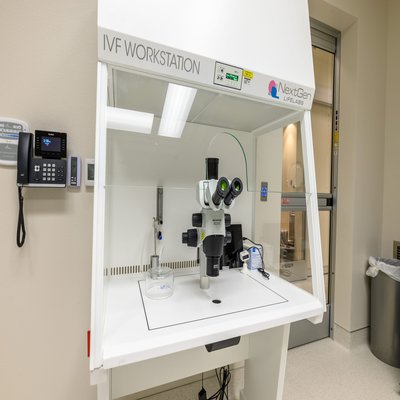
If your clinic offers AI selection, here are the questions you should ask:
- “What is your clinic’s own data on AI vs. standard selection? How many cycles? What was the improvement in live birth rate?”
- “Is the AI model validated on our clinic’s patient population?”
- “Will the AI be used in addition to embryologist review, or instead of it?” (Most clinics use AI as a second opinion, not a replacement.)
- “What is the cost? Is it covered by insurance?” (Usually not. Expect $500-1,000 extra.)
- “If the AI ranking differs from the embryologist’s opinion, whose judgment do you trust?”
One of my patients, “Sophia,” was offered AI selection on her third IVF cycle. She had 6 embryos. The AI picked one that the embryologist also rated highly. She transferred that embryo. It failed. The second-ranked embryo (also highly rated by embryologist) succeeded on the next transfer. Sophia said, “The AI didn’t harm anything, but it didn’t help either. I could have saved the money.”
On the other hand, a different patient, “Elena,” had a large pool of embryos — 12. The AI helped her clinic identify one that the embryologist had ranked lower but had features associated with higher implantation. That embryo became her daughter. Elena credits the AI. “It gave us a chance we might not have had,” she said.

AI embryo selection is a tool, not a miracle. It can help in some cases — especially for patients with many embryos and a history of failed transfers. But it’s not necessary for most. If you have few embryos, or if you’re on your first cycle with no prior failures, you can likely skip it without regret.
The technology will improve. By 2027 or 2028, AI may become standard. But in 2026, it’s still an optional add-on. Don’t let marketing pressure you into spending money you don’t have. Trust your embryologist. They’ve been doing this work long before AI came along.
This article reflects 2026 evidence and clinical experience. Always discuss technology options with your REI.
— Emily