

When we were trying for our second baby, I was the one doing all the work. Tracking my cycle. Taking my temperature. Popping supplements. Analyzing every twinge. My husband, Jake, was supportive — but passive. His job was to show up when I said it was time. That's not a partnership.
It took us 10 months to conceive our second. Ten months of negative tests, of me wondering if something was wrong with me. I went to my OB. I had blood work. I had an ultrasound. Everything looked fine. My doctor said, "Maybe it's just stress. Keep trying."
It didn't occur to anyone — including me — to check Jake.
A few years later, a friend told me about her journey. She and her husband had tried for two years. She'd done everything: IVF, acupuncture, dietary changes. Nothing worked. Finally, her REI suggested a semen analysis. Her husband's sperm count was low, and his DNA fragmentation was high. The problem wasn't her. It was him. And they'd spent two years and tens of thousands of dollars assuming otherwise.
That conversation was a wake-up call. I asked Jake to get tested. He was nervous — what man isn't? — but he agreed. His results came back normal. So the problem really wasn't him. But at least we knew. And we stopped assuming I was the broken one.
Male factor infertility contributes to up to 50% of couples struggling to conceive. That's half. Yet the conversation is almost always about the woman. We talk about egg quality, uterine lining, ovulation. We rarely talk about sperm. That's changing in 2026, but not fast enough.
Here's what you need to know about male fertility.
Semen analysis is easy, cheap, and non-invasive. A man produces a sample. A lab counts the sperm, checks their shape, and watches how they move. That's it. It costs maybe $150 without insurance. Compared to an HSG (hysteroscopy, $1,000+) or an IVF cycle ($15,000+), it's a bargain. And yet most couples wait years before doing it.
Sperm DNA fragmentation testing is now recommended. Standard semen analysis can miss problems. A man can have normal count, motility, and morphology — but high DNA fragmentation, which means the sperm's genetic material is damaged. High fragmentation is linked to failed fertilization, miscarriage, and poor embryo development. A 2025 clinical guideline from ASRM recommends DNA fragmentation testing for couples with unexplained infertility, recurrent miscarriage, or failed IVF cycles.
Lifestyle changes can improve sperm quality. Sperm take about 74 days to develop. Changes made today will show up in about three months. What helps:
- Weight loss in men with obesity (improves testosterone and reduces oxidative stress)
- Antioxidants (vitamin C, vitamin E, zinc, selenium, coenzyme Q10) — but only for men with proven deficiency or high oxidative stress, not all men
- Reducing heat exposure (no laptops on laps, no tight underwear, no frequent hot tubs or saunas)
- Limiting alcohol and quitting smoking
- Managing stress — chronic stress affects sperm quality
What doesn't help? Expensive "fertility" supplements sold to men with normal levels. Don't waste your money.
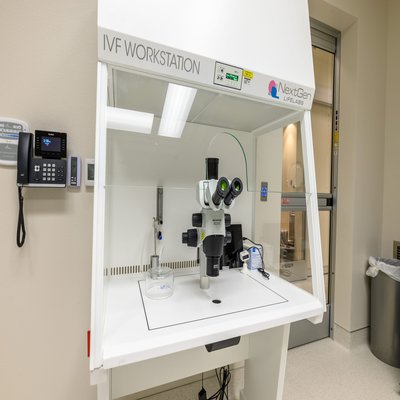
My friend "Jess" and her husband "Tom" are the reason I'm writing this article. They tried for two years. Jess had every test under the sun. Everything was normal. Tom refused a semen analysis for 18 months because he was "embarrassed." Finally, after a lot of gentle pressure, he did it. His count was low, and his DNA fragmentation was high. A varicocele repair surgery (a simple outpatient procedure) and three months of antioxidants improved his numbers dramatically. Jess conceived naturally three months later.
Tom told me afterward, "I wasted 18 months of our lives because I was too proud to give a sample. I'll never forgive myself for not going sooner. Guys: just do it. It's not that big a deal."
If you've been trying for six months (if you're over 35) or 12 months (if you're under 35), both partners should get a basic workup. Semen analysis for him. Blood work (day 3 FSH, AMH, thyroid, prolactin) and possibly an HSG for her. Don't assume the problem is on one side. Don't let embarrassment delay answers.
And if you're the female partner reading this: you can't force your partner to get tested. But you can share this article. You can suggest couples testing together. You can ask your REI to explain male factor at your next appointment. Most men will come around if they understand that testing is normal, not accusatory.
Male fertility matters. Sperm health affects fertilization, implantation, miscarriage risk, and even the long-term health of the baby. In 2026, we're finally starting to have honest conversations about this. Let's keep going. It takes two to make a baby. It should take two to get answers.
This article reflects clinical observations and evidence. Always consult a reproductive specialist for personalized testing recommendations.
— Emily Carter, RDN